World Health Organization’s recommendations
Every move counts
Being active has significant health benefits for hearts, bodies and minds, whether you’re walking, wheeling or cycling, dancing, doing sport or playing with your kids.
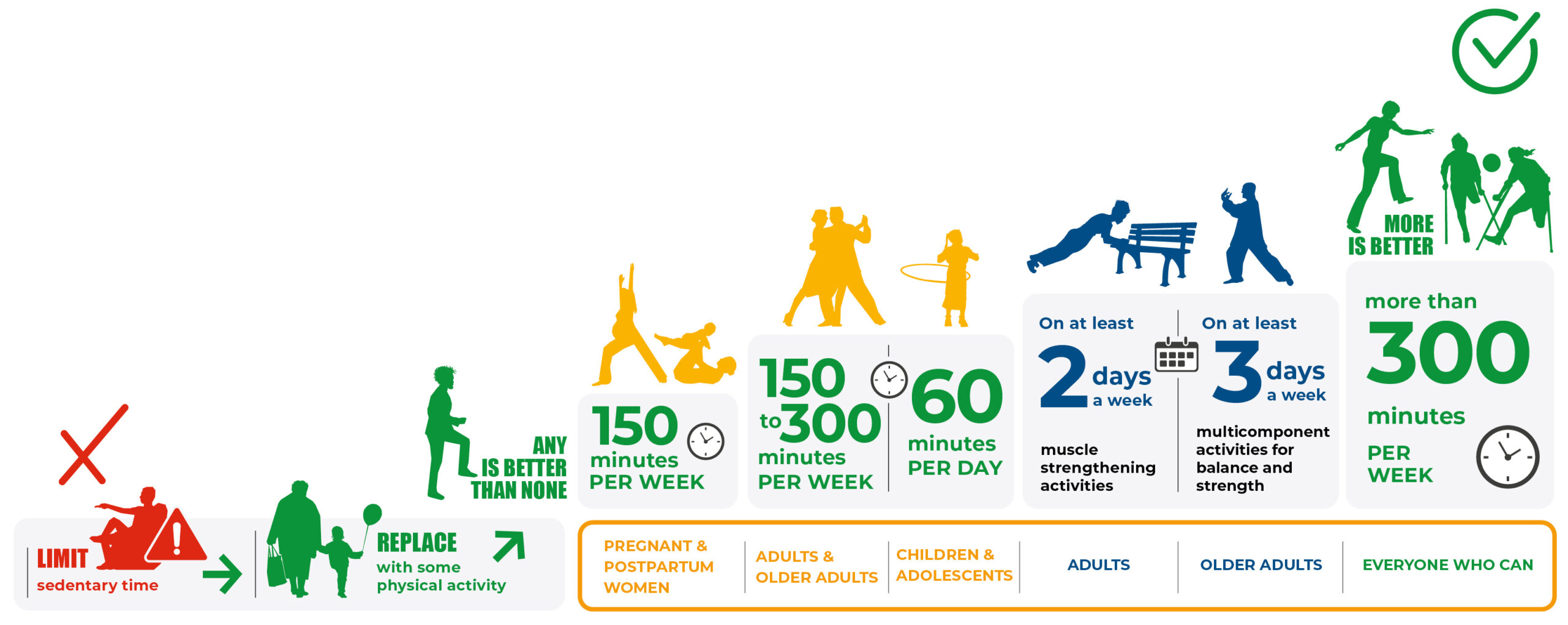
WHO guidelines on physical activity and sedentary behaviour (2020).
For more information, visit : www.who.int/health-topics/physical-activity
For more information, visit : www.who.int/health-topics/physical-activity
Consult the page WHO fact sheet
or download the detailed brochure: WHO guidelines on physical activity and sedentary behaviour.
People living with chronic conditions (hypertension, type 2 diabetes, HIV and cancer survivors)
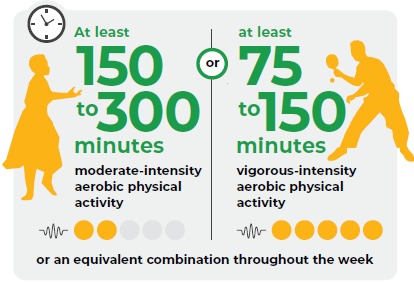
- should do at least 150–300 minutes of moderate-intensity aerobic physical activity;
- or at least 75–150 minutes of vigorous-intensity aerobic physical activity; or an equivalent combination of moderate- and vigorous-intensity activity throughout the week
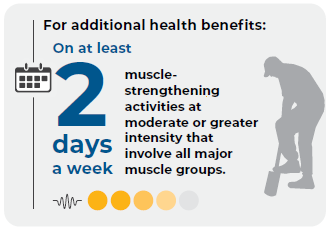
- should also do muscle-strengthening activities at moderate or greater intensity that involve all major muscle groups on 2 or more days a week, as these provide additional health benefits.
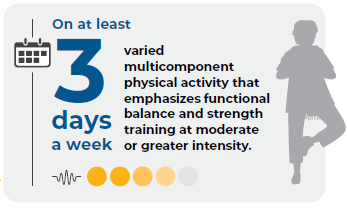
- As part of their weekly physical activity, older adults should do varied multicomponent physical activity that emphasizes functional balance and strength training at moderate or greater intensity, on 3 or more days a week, to enhance functional capacity and to prevent falls.
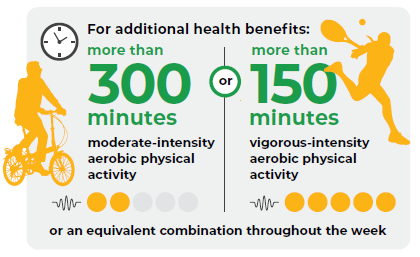
- may increase moderate-intensity aerobic physical activity to more than 300 minutes; or do more than 150 minutes of vigorous-intensity aerobic physical activity; or an equivalent combination of moderate- and vigorous-intensity activity throughout the week for additional health benefits.
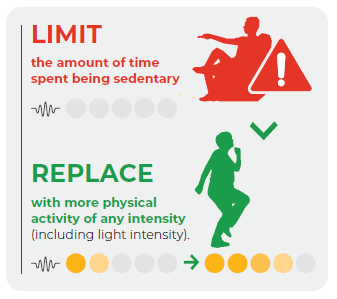
- should limit the amount of time spent being sedentary. Replacing sedentary time with physical activity of any intensity (including light intensity) provides health benefits, and
- to help reduce the detrimental effects of high levels of sedentary behaviour on health, all adults and older adults should aim to do more than the recommended levels of moderate- to vigorous-intensity physical activity.
Children and adolescents living with disability
- should do at least an average of 60 minutes per day of moderate-to-vigorous intensity, mostly aerobic, physical activity, across the week.
- should incorporate vigorous-intensity aerobic activities, as well as those that strengthen muscle and bone, at least 3 days a week.
- should limit the amount of time spent being sedentary, particularly the amount of recreational screen time.
Adults living with disability
- should do at least 150–300 minutes of moderate-intensity aerobic physical activity;
- or at least 75–150 minutes of vigorous-intensity aerobic physical activity; or an equivalent combination of moderate- and vigorous-intensity activity throughout the week
- should also do muscle-strengthening activities at moderate or greater intensity that involve all major muscle groups on 2 or more days a week, as these provide additional health benefits.
- As part of their weekly physical activity, older adults should do varied multicomponent physical activity that emphasizes functional balance and strength training at moderate or greater intensity, on 3 or more days a week, to enhance functional capacity and to prevent falls.
- may increase moderate-intensity aerobic physical activity to more than 300 minutes; or do more than 150 minutes of vigorous-intensity aerobic physical activity; or an equivalent combination of moderate- and vigorous-intensity activity throughout the week for additional health benefits.
- should limit the amount of time spent being sedentary. Replacing sedentary time with physical activity of any intensity (including light intensity) provides health benefits, and
- to help reduce the detrimental effects of high levels of sedentary behaviour on health, all adults and older adults should aim to do more than the recommended levels of moderate- to vigorous-intensity physical activity.
- It is possible to avoid sedentary behaviour and be physically active while sitting or lying. E.g. Upper body led activities, inclusive and/or wheelchair-specific sport and activities.
For more information:
- Gesond iessen Méi beweegen: https://gimb.public.lu/fr.html
- World Health Organization: https://www.who.int/news-room/fact-sheets/detail/physical-activit